CLINICAL METHODS · UNDERGRADUATE MBBS
Case Scenarios: History Taking in Jaundice
Two structured case vignettes for small-group discussion and viva practice
Instructions for use
Read each vignette as if interviewing the patient. Attempt the discussion questions before checking the teaching points. Focus on which parts of the history point toward the diagnosis and how they would be elicited at the bedside.
CASE SCENARIO 1
Acute Viral Hepatitis (Hepatitis A)
Patient: A 19-year-old male college student
Presenting complaint: Yellowish discolouration of eyes for 4 days, associated with fever and loss of appetite for the preceding week
History of Present Illness
The patient was in his usual state of health until about 10 days ago, when he developed low-grade fever, generalised body ache, and marked loss of appetite. He also noticed nausea and two episodes of vomiting, along with distaste for fatty foods and cigarettes (he is an occasional smoker). Four days prior to presentation, his roommate noticed yellowish discolouration of his eyes, which he confirmed on looking in the mirror. Over the next two days, he noticed his urine had become noticeably dark, “like tea,” while his stools remained normal in colour. He denies any abdominal pain, itching, or weight loss. The fever has settled over the last two days, though the jaundice appears unchanged.
Directed / Risk Factor History
- Lives in a shared hostel; reports that two other hostel-mates had a similar illness with jaundice about three weeks ago.
- Frequently eats from roadside food stalls; recalls attending a large wedding function with buffet-style food nine days before symptom onset.
- No history of blood transfusion, intravenous drug use, tattooing, or unprotected sexual contact.
- No recent travel outside the city.
- No new medications, herbal remedies, or over-the-counter drug use in the preceding months.
- Denies significant alcohol use; drinks socially, less than twice a month.
Past Medical, Family & Social History
- No previous episodes of jaundice.
- No chronic illness; not on any regular medication.
- No family history of liver disease.
- Non-smoker of tobacco other than occasional cigarettes; no illicit drug use.

Key Teaching Points
- A prodrome of fever, malaise, anorexia, and nausea preceding jaundice is classic for viral hepatitis.
- Point-source clustering of cases and faeco-oral exposures should always be asked about explicitly.
- Dark urine with normal stool colour indicates conjugated hyperbilirubinaemia without complete cholestasis — typical of hepatocellular disease.
- A directed screen for red flags (confusion, bleeding) is mandatory even when the presentation appears straightforward.
CASE SCENARIO 2
Wilson’s Disease
Patient: A 16-year-old girl, brought by her parents
Presenting complaint: Yellowish discolouration of eyes for 3 weeks, and “clumsiness” with deteriorating school performance for the past 6 months
History of Present Illness
The parents report a gradual yellowish tinge to the girl’s eyes over the past three weeks, which they initially attributed to tiredness from examinations. On direct questioning, they recall that over the past six months her handwriting has become untidy and she has had difficulty with fine tasks such as buttoning her clothes. Her class teacher has also commented that her academic performance has declined and that she appears more withdrawn and irritable than before. There is no history of fever, abdominal pain, or itching. Urine colour has not been specifically noticed by the family, but on questioning today they mention it has looked “a little dark” over the past week. Stool colour has been normal. There is no history of vomiting, weight loss, or altered sleep pattern.
Directed History
- No history of blood transfusion, injections, tattoos, or high-risk sexual exposure.
- No recent travel, and no similar illness in family members, friends, or neighbours.
- Not on any regular medication; denies alcohol or substance use.
- No history of recurrent mild jaundice in the past.
Family History
- Parents are first cousins (consanguineous marriage).
- An elder brother, aged 22, was diagnosed with “liver disease” in his teenage years and is said to be on long-term tablets, though the family is unsure of the exact diagnosis.
- No known family history of viral hepatitis.

Additional History on Direct Questioning
- No tremor noticed at rest, but family describes an occasional shakiness of the hands when she tries to write or hold a cup.
- No episodes of jaundice-associated dark urine and pale stools together, arguing against a purely obstructive process.
- No history of joint pains, skin rash, or recurrent miscarriages in the family to suggest autoimmune disease.
- Key Teaching Points
- Always ask about neurological and behavioural symptoms in a young patient with unexplained jaundice.
- Consanguinity and a family history of unexplained liver disease at a young age should raise suspicion for an inherited metabolic liver disease.
- Wilson’s disease can present anywhere on a spectrum from purely hepatic to purely neuropsychiatric — history should screen for both.
Comparing the Two Cases
| Feature | Acute Viral Hepatitis | Wilson’s Disease |
| Typical age | Any age, common in young adults | Second–third decade of life |
| Onset | Preceded by fever, malaise, anorexia | Insidious, often over months |
| Key associated clue | Point-source exposure / contact history | Neuropsychiatric symptoms, behavioural change |
| Family history | Usually not relevant (unless shared exposure) | Consanguinity, affected siblings |
| Urine/stool | Dark urine, normal stool | Variable; not the discriminating clue |
| Confirms suspicion | Contact/exposure history + prodrome | Family history + neurological signs (e.g., tremor) |
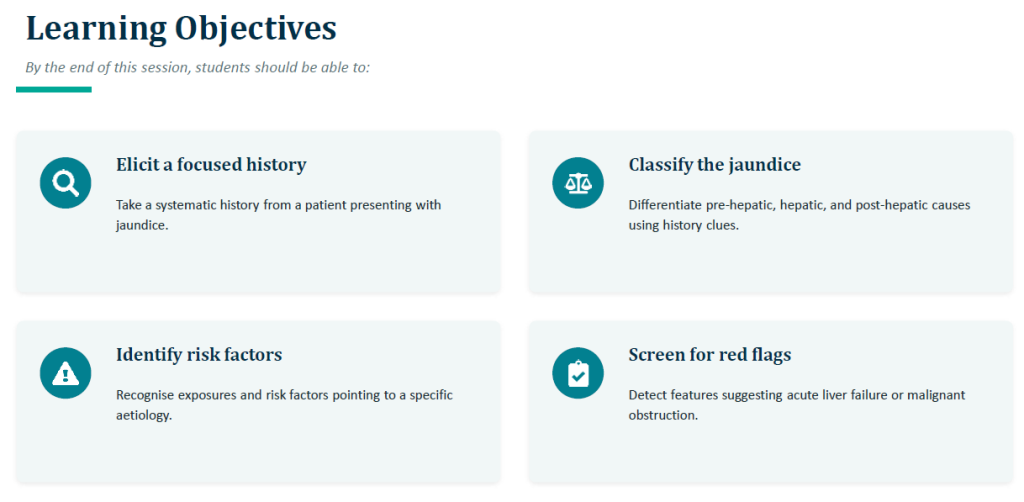
Learning Objectives
By the end of this session, students should be able to:
Elicit a focused history
Take a systematic history from a patient presenting with
jaundice.
Classify the jaundice
Differentiate pre
hepatic, hepatic, and post hepatic causes
using history clues.
Identify risk factors
Recognise exposures and risk factors pointing to a specific
aetiology.
Screen for red flags
Detect features suggesting acute liver failure or malignant
obstruction.
History Taking in Jaundice
2
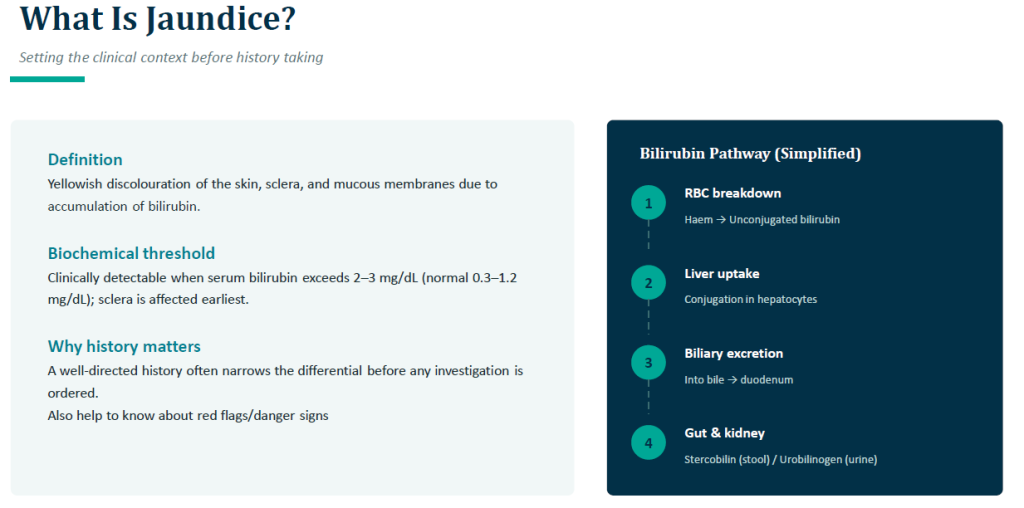
What Is Jaundice?
Setting the clinical context before history taking
Definition
Yellowish discolouration of the skin, sclera, and mucous membranes due to
accumulation of bilirubin.
Biochemical threshold
Clinically detectable when serum bilirubin exceeds 2 3 mg/dL (normal 0.3 1.2
mg/dL); sclera is affected earliest.
Why history matters
A well directed history often narrows the differential before any investigation is
ordered.
Also help to know about red flags/danger signs
Bilirubin Pathway (Simplified)
1
RBC breakdown
Haem → Unconjugated bilirubin
2
Liver uptake
Conjugation in hepatocytes
3
Biliary excretion
Into bile → duodenum
4
Gut & kidney
Stercobilin (stool) / Urobilinogen (urine)
History Taking in Jaundice
3
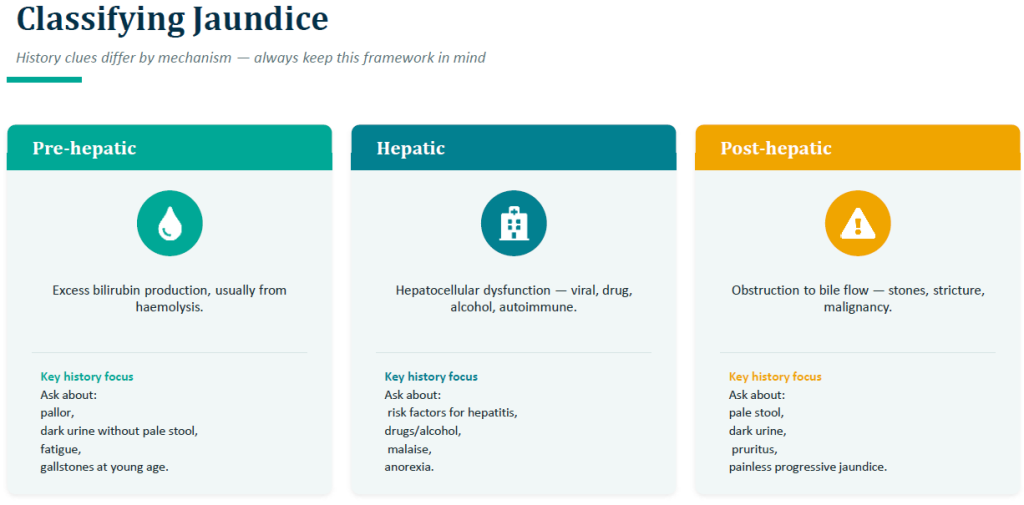
Classifying Jaundice
History clues differ by mechanism
always keep this framework in mind
Pre
hepatic
Excess bilirubin production, usually from
haemolysis.
Key history focus
Ask about:
pallor,
dark urine without pale stool,
fatigue,
gallstones at young age.
Hepatic
Hepatocellular dysfunction
viral, drug,
alcohol, autoimmune.
Key history focus
Ask about:
risk factors for hepatitis,
drugs/alcohol,
malaise,
anorexia.
Post
hepatic
Obstruction to bile flow
stones, stricture,
malignancy.
Key history focus
Ask about:
pale stool,
dark urine,
pruritus,
painless progressive jaundice.
History Taking in Jaundice
4
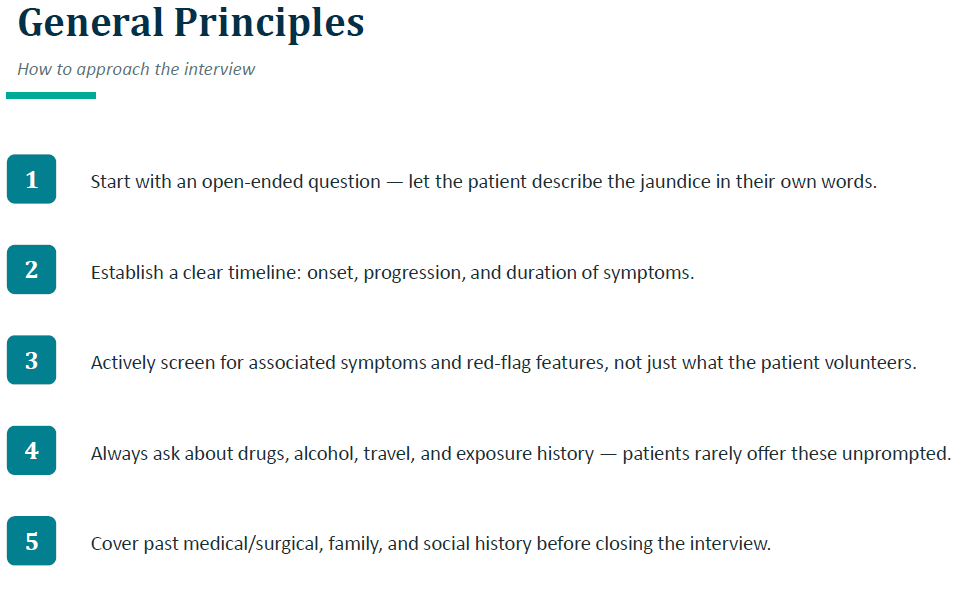
General Principles
How to approach the interview
1
Start with an open
ended question let the patient describe the jaundice in their own words.
2
Establish a clear timeline: onset, progression, and duration of symptoms.
3
Actively screen for associated symptoms and red
flag features, not just what the patient volunteers.
4
Always ask about drugs, alcohol, travel, and exposure history
patients rarely offer these unprompted.
5
Cover past medical/surgical, family, and social history before closing the interview.
History Taking in Jaundice
5
History of Present Illness
Onset, duration & progression of jaundice
First ask the patient (or a relative) exactly when the yellow discolouration was first noticed, and by whom.
Onset
Sudden onset favours viral hepatitis or drug
induced injury; gradual, painless onset favours malignant obstruction.
Duration
Note the exact number of days/weeks
helps distinguish acute from chronic liver disease.
Progression
Ask if the jaundice is increasing, static, or fluctuating; fluctuating jaundice suggests intermittent obstruction (e.g., ston
e).
First noticed where
Sclera is usually noticed before skin
ask who first noticed it (patient, family, or on routine check up).
History Taking in Jaundice
6
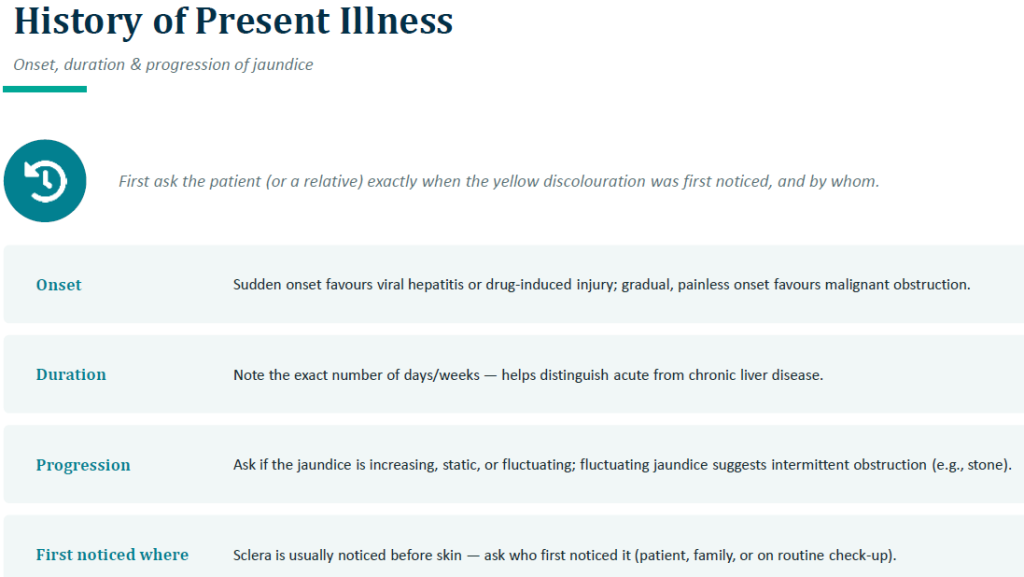
Associated Symptoms
Actively ask about each of the following
Abdominal pain
RUQ/biliary colic pain suggests gallstone disease; painless
jaundice raises suspicion of malignancy.
Fever
Fever with rigors and RUQ pain (Charcot’s triad) suggests
ascending cholangitis.
Pruritus (itching)
Generalised itching indicates cholestasis from bile salt
accumulation common in obstructive causes.
Constitutional symptoms
Anorexia, malaise, nausea, and vomiting are common in
hepatocellular disease; weight loss suggests malignancy.
History Taking in Jaundice
7
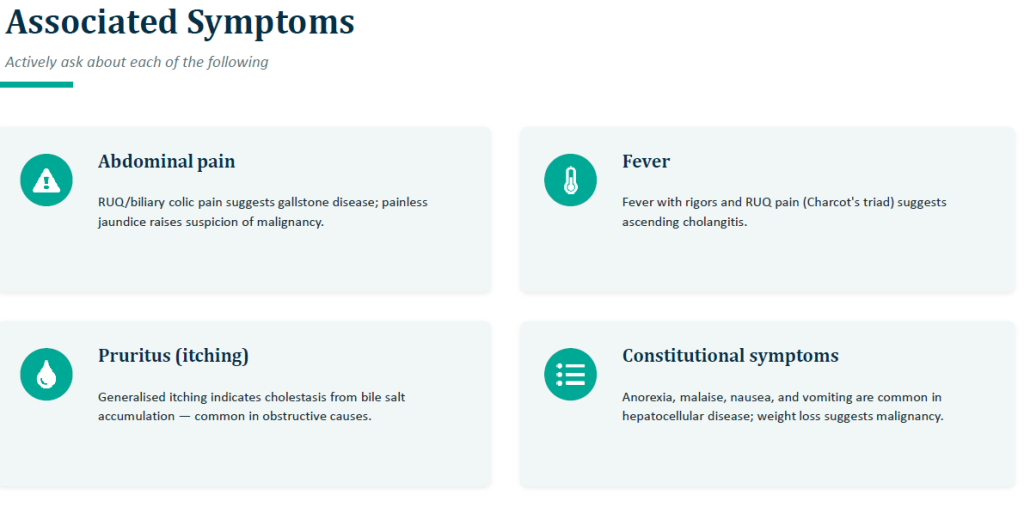
Urine & Stool Colour
One of the most powerful discriminators in the jaundice history
Pre
hepatic
URINE
Normal (unconjugated bilirubin not water
soluble)
STOOL
Normal, or slightly dark (↑ stercobilin)
Hepatic
URINE
Dark (mildly ↑ conjugated bilirubin)
STOOL
Normal to mildly pale
Post
hepatic
URINE
Dark (↑↑ conjugated bilirubin spills into
urine)
STOOL
Pale / clay
coloured (no bile reaches gut)
8
History Taking in Jaundice
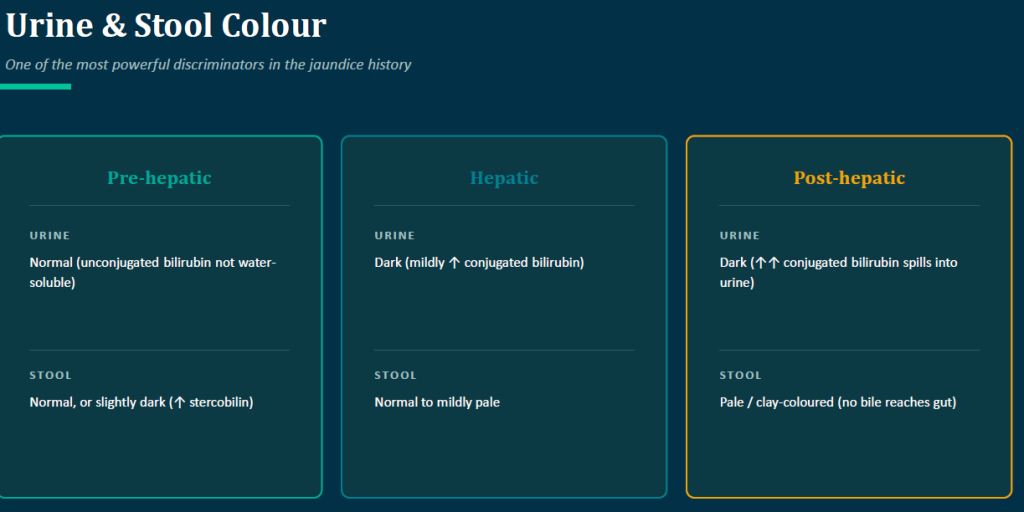
Risk Factors for Viral Hepatitis
Essential exposure history
ask directly, patients rarely volunteer this
Travel history
Travel to areas with poor sanitation (Hepatitis A/E
faeco oral spread).
Food & water
Contaminated food, shellfish, or untreated water
sources.
Injections/IV drug use
Unsafe injections, IV drug use, tattoos, piercings
(Hepatitis B/
Blood transfusion
Previous transfusion, dialysis, or surgery (Hepatitis
B/C).
Sexual history
Unprotected intercourse, multiple partners (Hepatitis
B).
Occupational exposure
Healthcare workers
needle stick injuries, contact
with body fluids.
History Taking in Jaundice
9
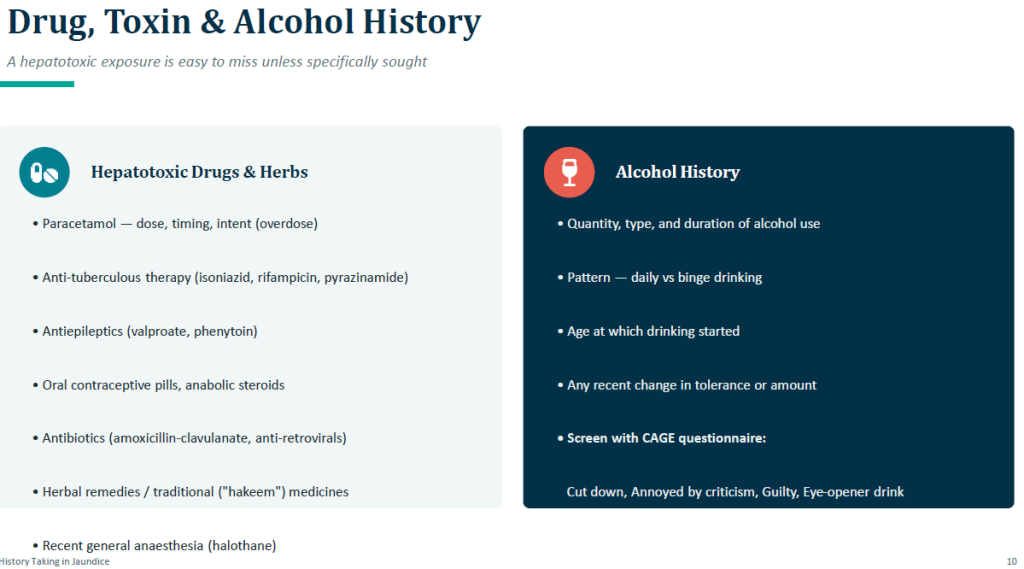
Drug, Toxin & Alcohol History
A hepatotoxic exposure is easy to miss unless specifically sought
Hepatotoxic Drugs & Herbs
- Paracetamol
dose, timing, intent (overdose) - Anti
tuberculous therapy (isoniazid, rifampicin, pyrazinamide) - Antiepileptics (valproate, phenytoin)
- Oral contraceptive pills, anabolic steroids
- Antibiotics (amoxicillin
clavulanate, anti retrovirals) - Herbal remedies / traditional (“hakeem”) medicines
- Recent general anaesthesia (halothane)
Alcohol History - Quantity, type, and duration of alcohol use
- Pattern
daily vs binge drinking - Age at which drinking started
- Any recent change in tolerance or amount
- Screen with CAGE questionnaire:
Cut down, Annoyed by criticism, Guilty, Eye
opener drink
History Taking in Jaundice
10
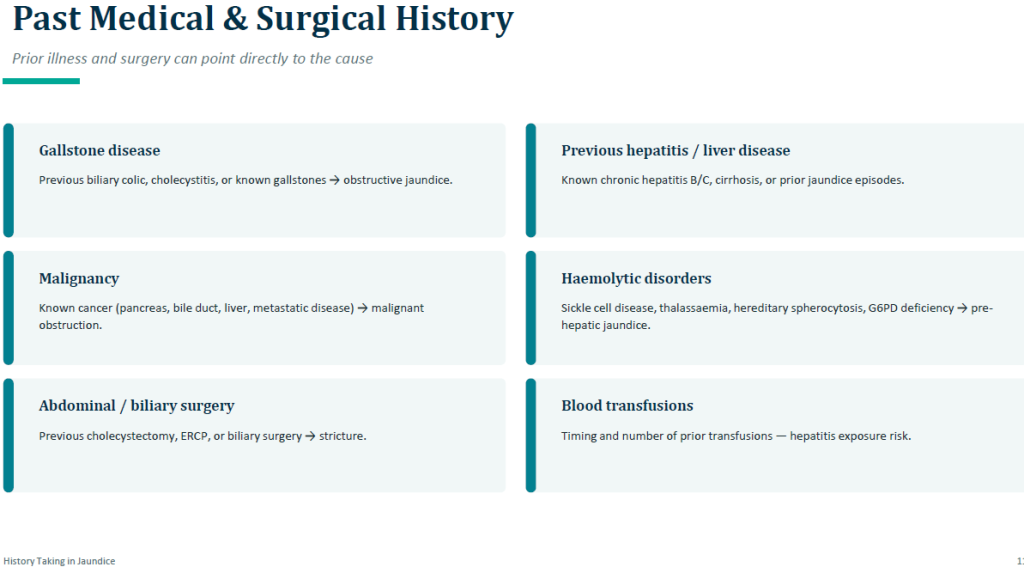
Past Medical & Surgical History
Prior illness and surgery can point directly to the cause
Gallstone disease
Previous biliary colic, cholecystitis, or known gallstones → obstructive jaundice.
Previous hepatitis / liver disease
Known chronic hepatitis B/C, cirrhosis, or prior jaundice episodes.
Malignancy
Known cancer (pancreas, bile duct, liver, metastatic disease) → malignant
obstruction.
Haemolytic disorders
Sickle cell disease, thalassaemia, hereditary spherocytosis, G6PD deficiency → pre
hepatic jaundice.
Abdominal / biliary surgery
Previous cholecystectomy, ERCP, or biliary surgery → stricture.
Blood transfusions
Timing and number of prior transfusions
hepatitis exposure risk.
History Taking in Jaundice
11
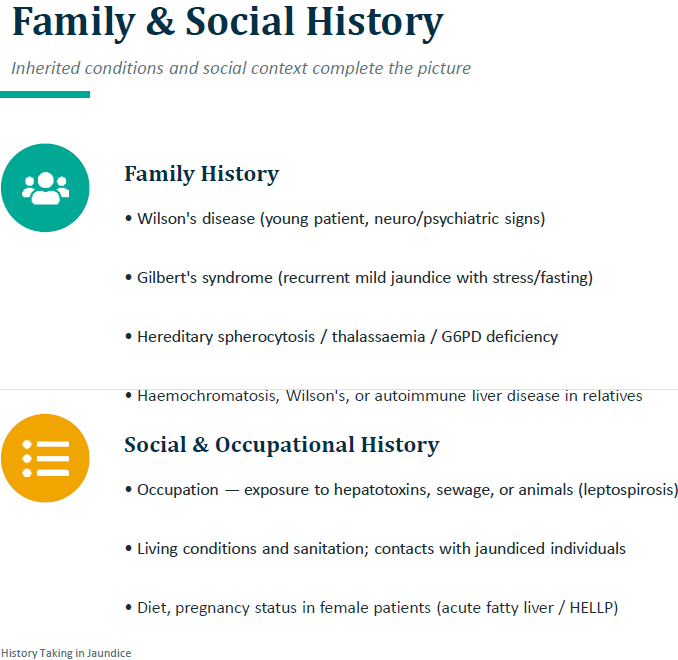
Family & Social History
Inherited conditions and social context complete the picture
Family History
- Wilson’s disease (young patient, neuro/psychiatric signs)
- Gilbert’s syndrome (recurrent mild jaundice with stress/fasting)
- Hereditary spherocytosis / thalassaemia / G6PD deficiency
- Haemochromatosis, Wilson’s, or autoimmune liver disease in relatives
Social & Occupational History - Occupation
exposure to hepatotoxins, sewage, or animals (leptospirosis) - Living conditions and sanitation; contacts with jaundiced individuals
- Diet, pregnancy status in female patients (acute fatty liver / HELLP)
History Taking in Jaundice
12
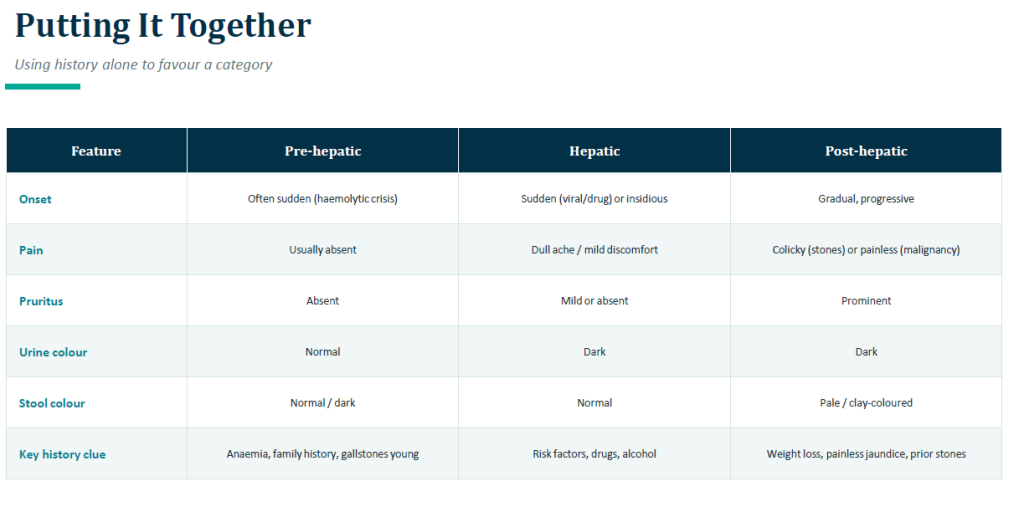
Putting It Together
Using history alone to favour a category
Feature
Pre
hepatic Hepatic
Post
hepatic
Onset
Often sudden (haemolytic crisis)
Sudden (viral/drug) or insidious
Gradual, progressive
Pain
Usually absent
Dull ache / mild discomfort
Colicky (stones) or painless (malignancy)
Pruritus
Absent
Mild or absent
Prominent
Urine colour
Normal
Dark
Dark
Stool colour
Normal / dark
Normal
Pale / clay
coloured
Key history clue
Anaemia, family history, gallstones young
Risk factors, drugs, alcohol
Weight loss, painless jaundice, prior stones
History Taking in Jaundice
13
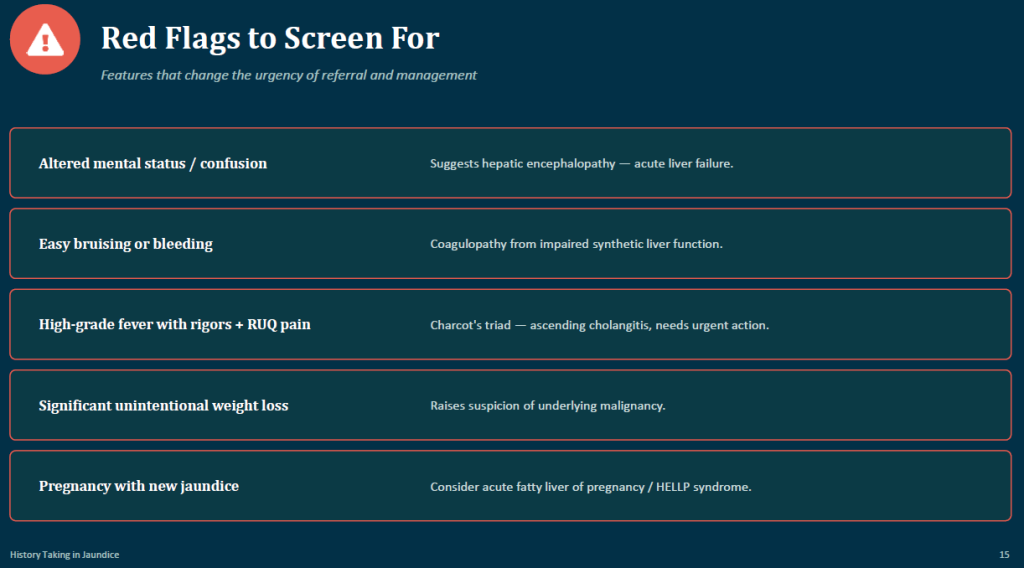
Red Flags to Screen For
Features that change the urgency of referral and management
Altered mental status / confusion
Suggests hepatic encephalopathy
acute liver failure.
Easy bruising or bleeding
Coagulopathy from impaired synthetic liver function.
High
grade fever with rigors + RUQ pain Charcot’s triad
ascending cholangitis, needs urgent action.
Significant unintentional weight loss
Raises suspicion of underlying malignancy.
Pregnancy with new jaundice
Consider acute fatty liver of pregnancy / HELLP syndrome.
15
History Taking in Jaundice
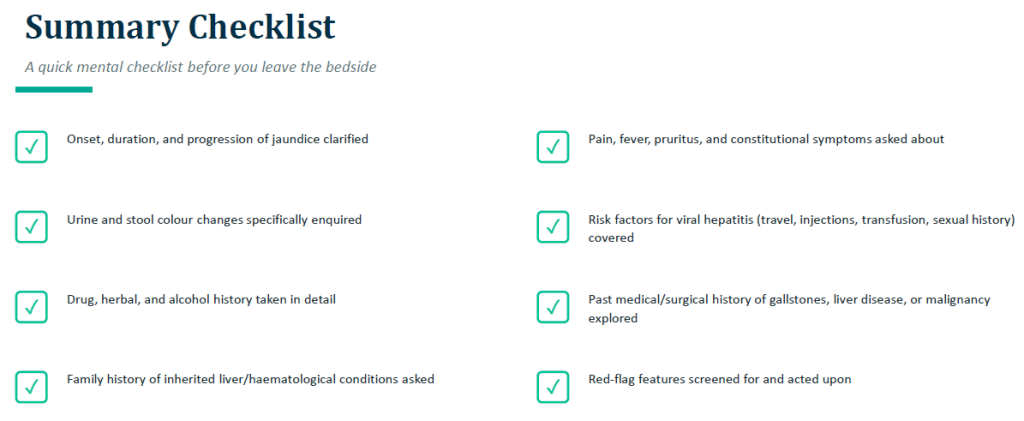
Summary Checklist
A quick mental checklist before you leave the bedside
✓
Onset, duration, and progression of jaundice clarified
✓
Pain, fever, pruritus, and constitutional symptoms asked about
✓
Urine and stool colour changes specifically enquired
✓
Risk factors for viral hepatitis (travel, injections, transfusion, sexual history)
covered
✓
Drug, herbal, and alcohol history taken in detail
✓
Past medical/surgical history of gallstones, liver disease, or malignancy
explored
✓
Family history of inherited liver/haematological conditions asked
✓
Red
flag features screened for and acted upon
History Taking in Jaundice
15
More useful Links
More Medical Links