Learning Objectives
•Perform safe and aseptic collection of clinical specimen (urine, sputum, swabs and stool) for microbiological analysis
•Apply appropriate techniques to ensure specimen integrity, including proper labeling, storage, and transport to avoid contamination

•Demonstrate understanding of standard infection prevention and control practices during specimen collection and handling
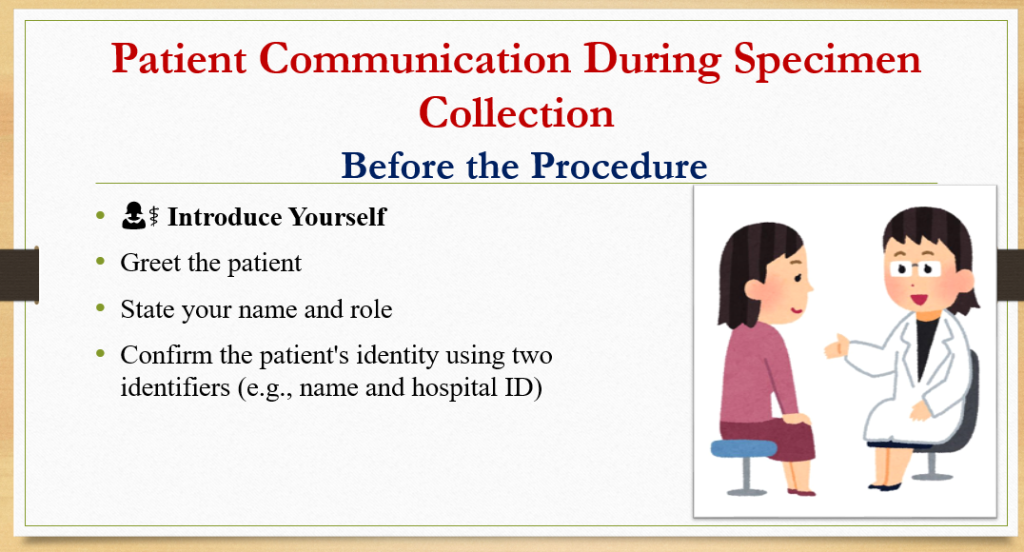
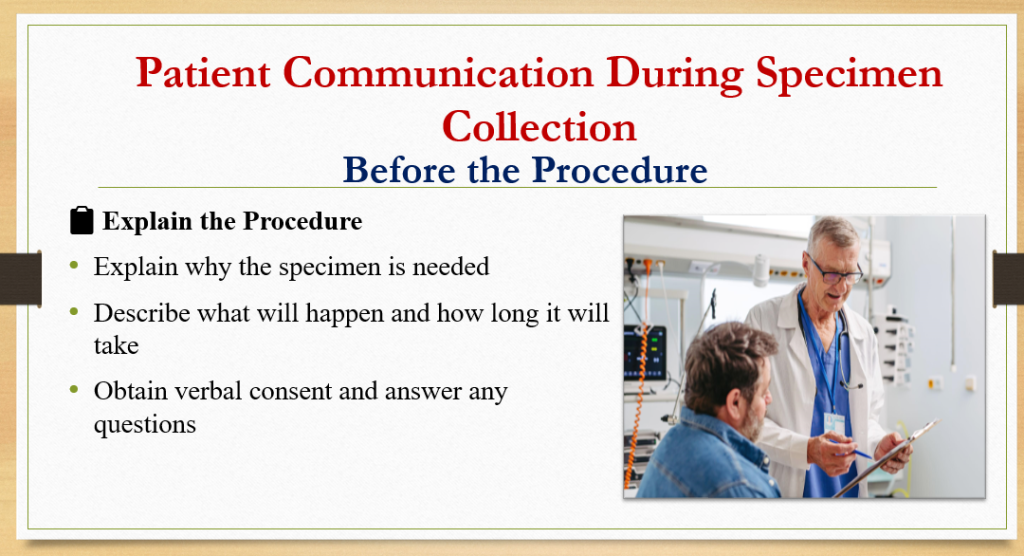
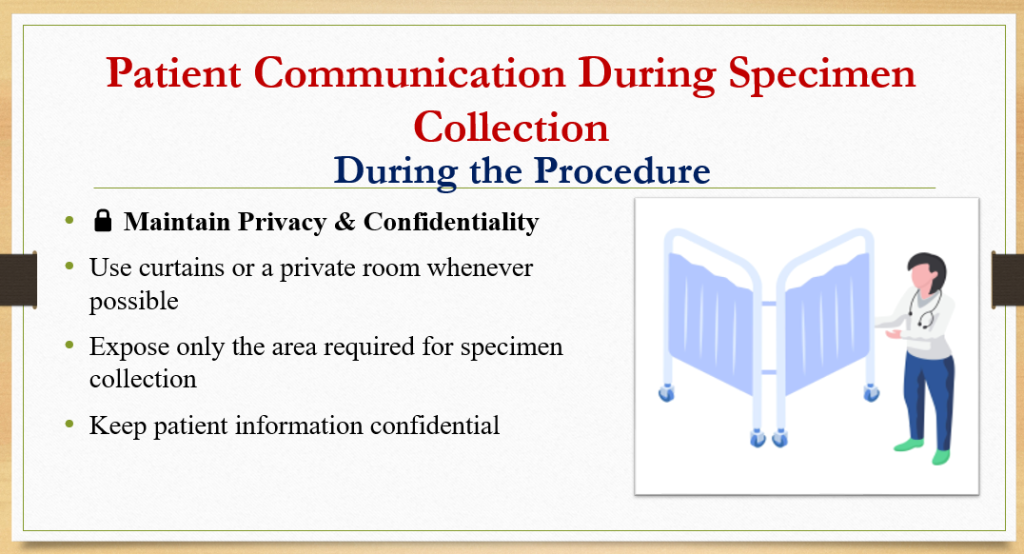
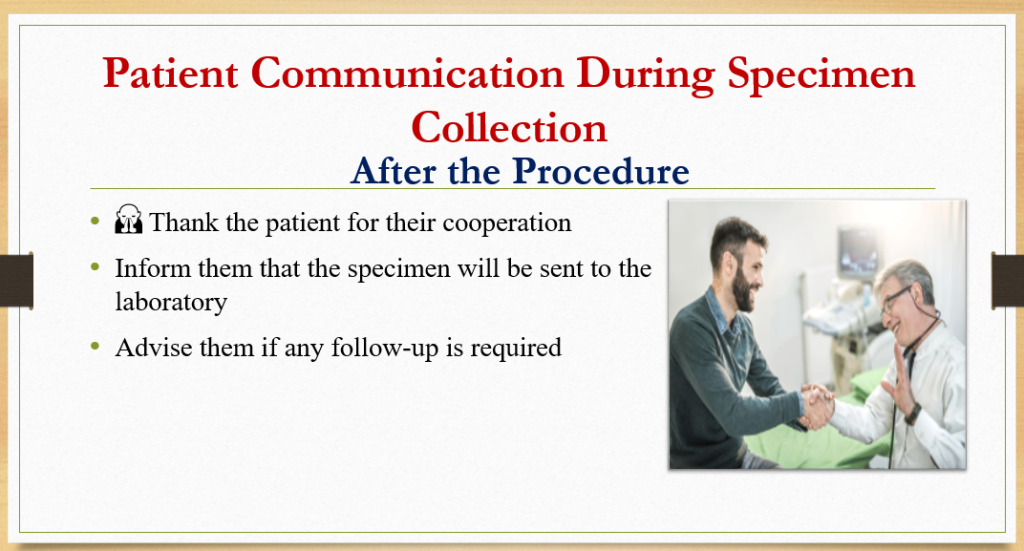
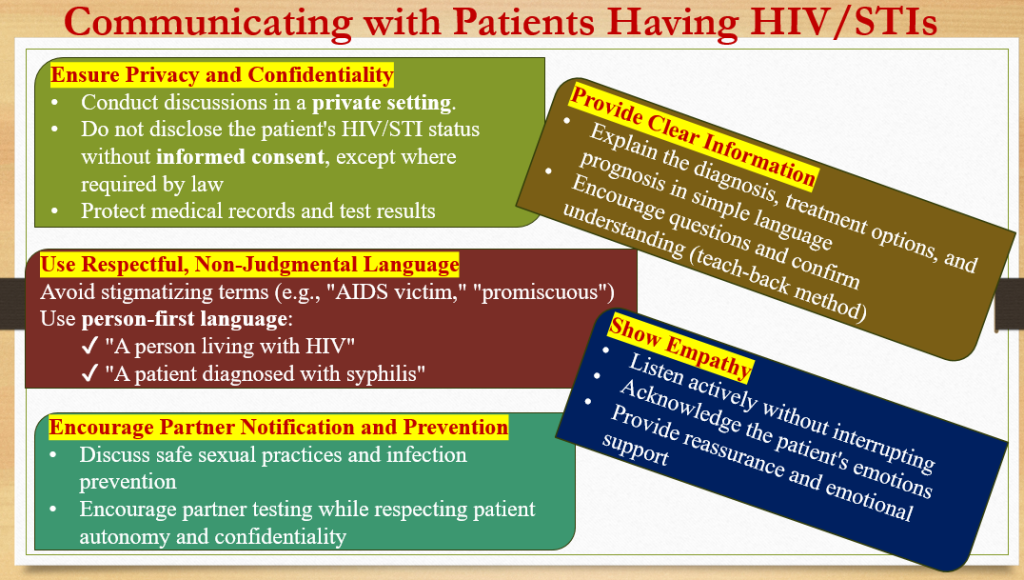
•Demonstrate effective Communication with patients while maintaining confidentiality and professionalism
Introduction
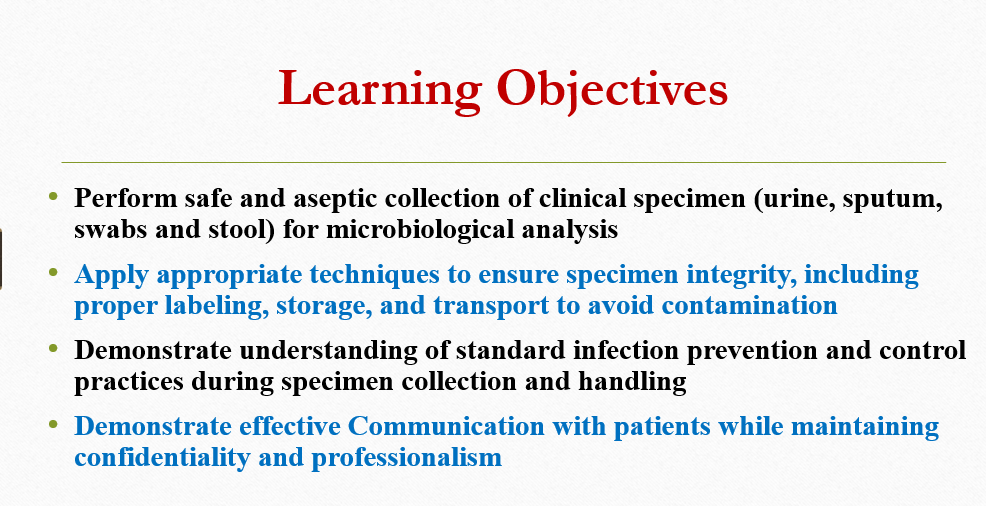
•Specimen collection and transportation are critical considerations, because any results the laboratory generates is limited by the quality of the specimen and its condition on arrival in the laboratory
•Specimens should be obtained to minimize the possibility of introducing contaminating microorganisms that are not involved in the infectious process
General guidelines
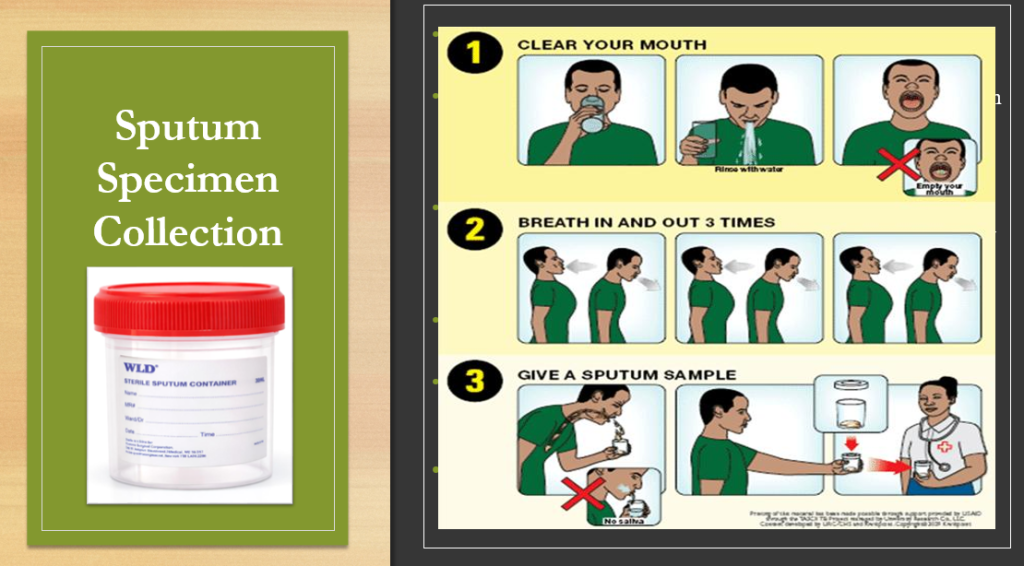
Obtain specimen that is representative of the infectious process (e.g. sputum in case of respiratory tract infection not saliva)
Apply aseptic techniques to prevent contamination of the specimen with normal body flora and environmental microbes
Provide adequate quantity of specimen for the desired test
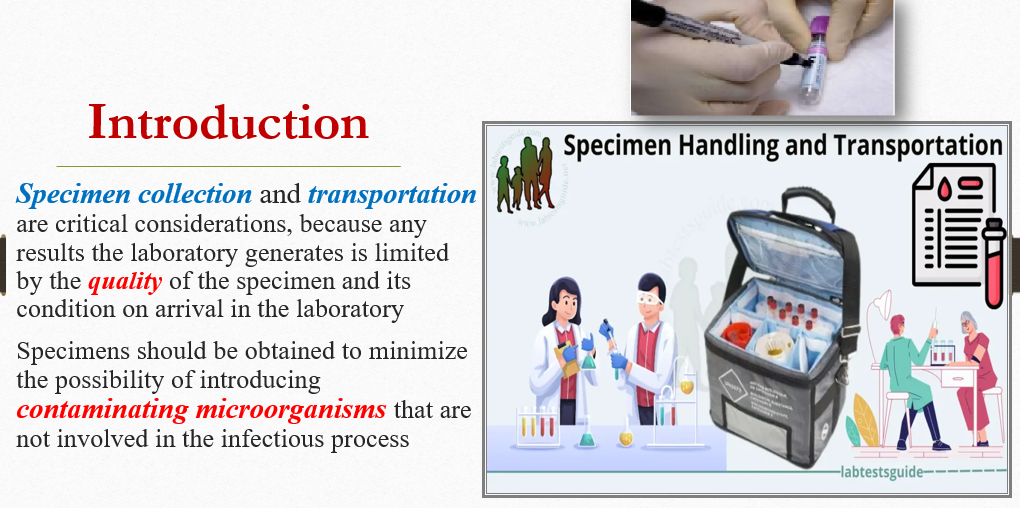
Label and date the container appropriately with Name, age and registration number of patient, date and time of sampling, type of sample
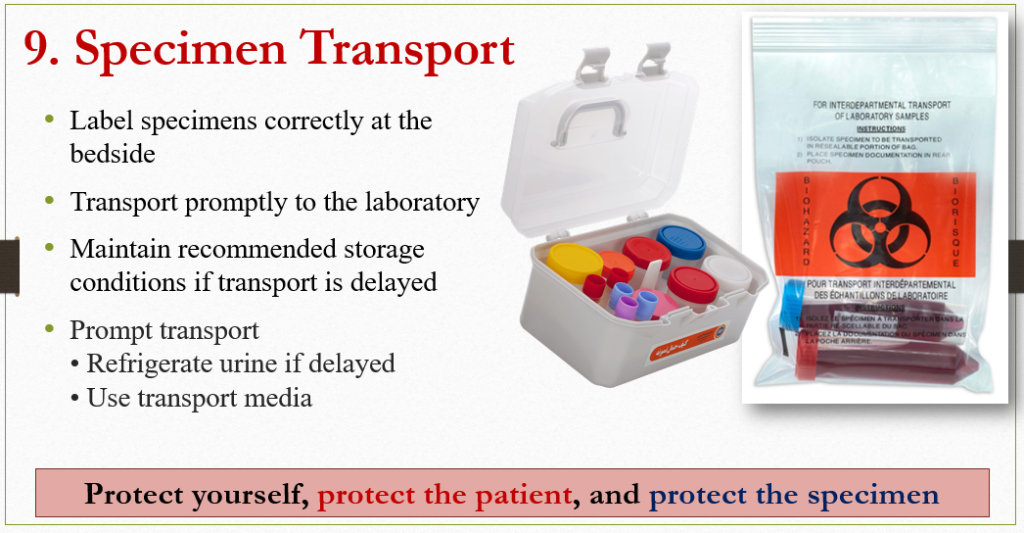
Arrange for immediate transportation to the microbiology laboratory
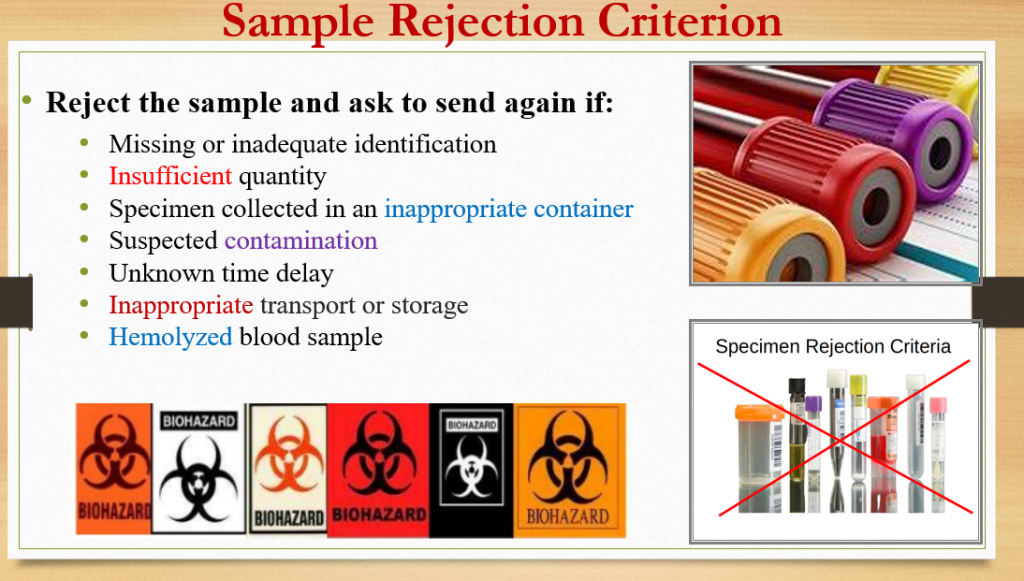
Send another sample in case of rejection by laboratory
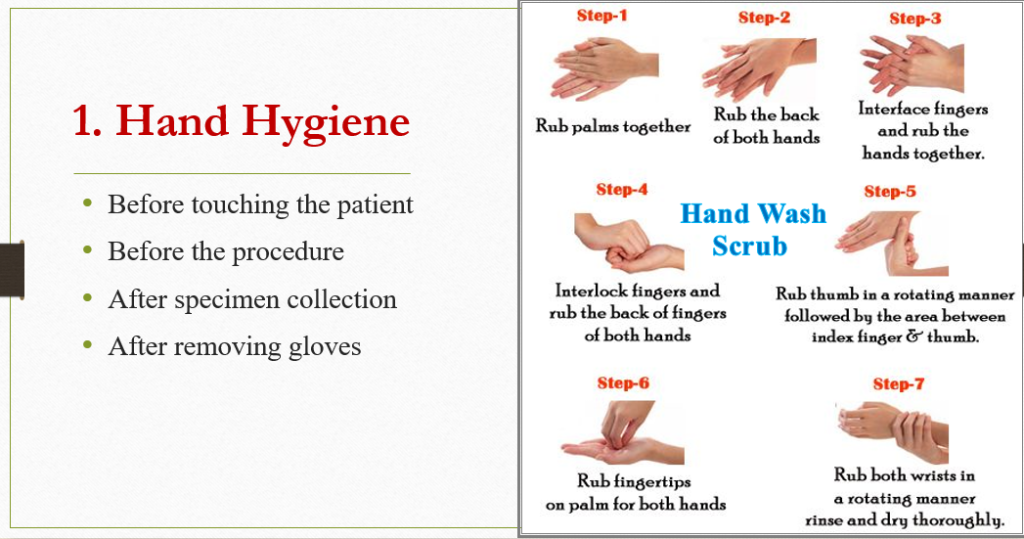
Wash hands before and after collection
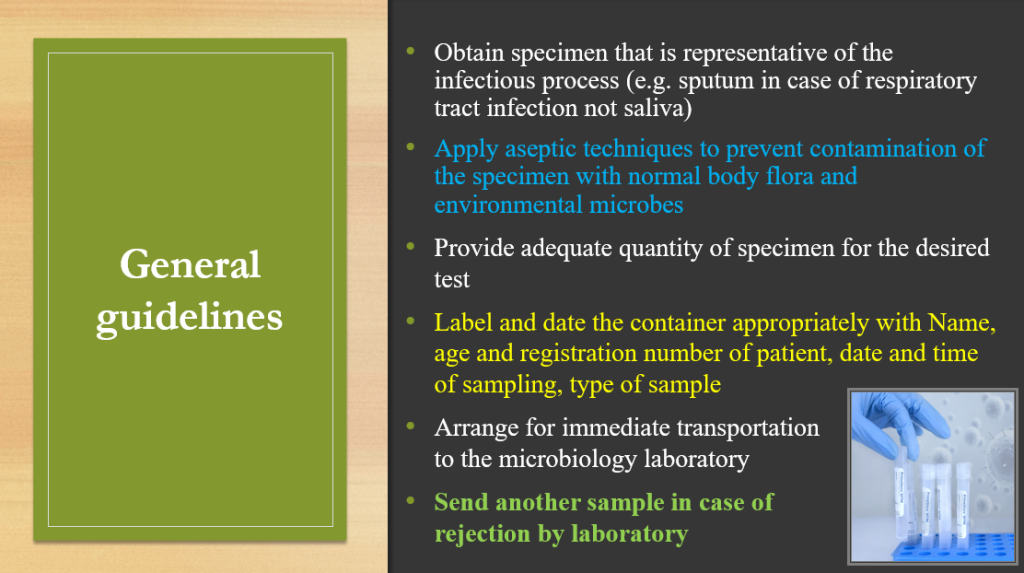
Collect or place the specimen aseptically in sterile or appropriate container
Close the container tightly. It also prevents leakage of contents
Collect the sample before the administration of antimicrobials or 1-3 days/48 hrs after stopping the antibiotics
Avoid contact with antiseptic or disinfectant
Collect the specimen at the appropriate or acute phase of disease
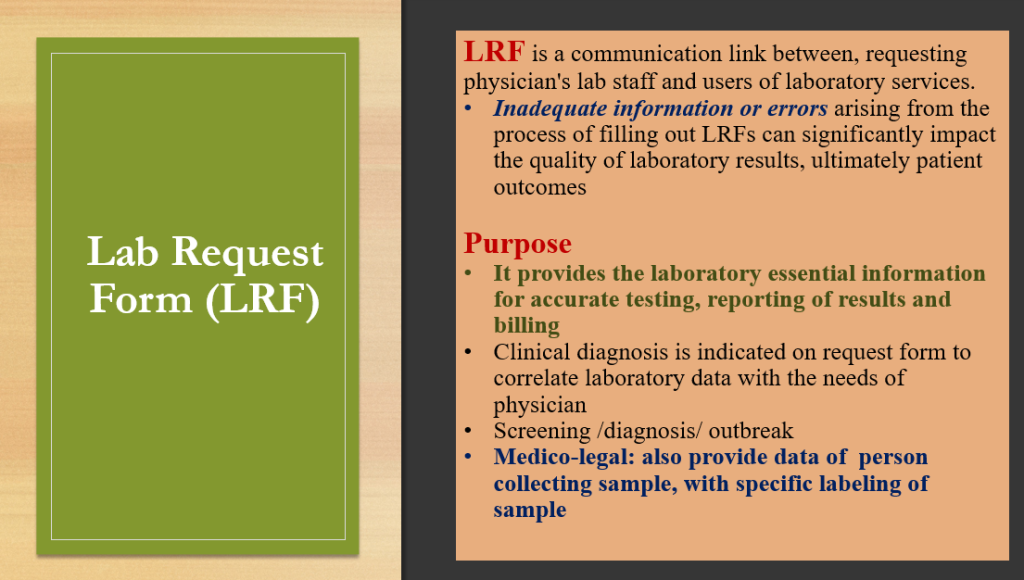
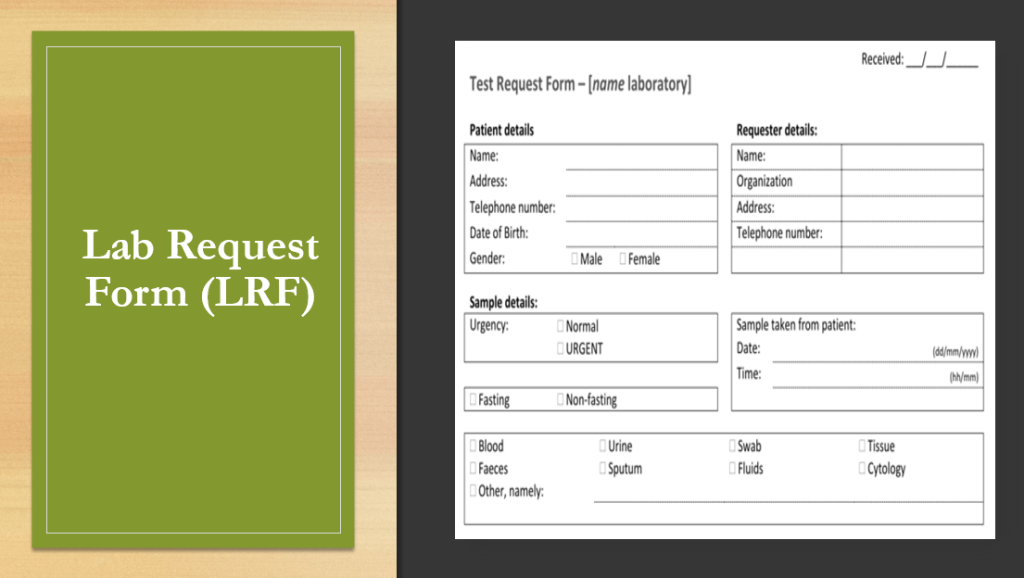
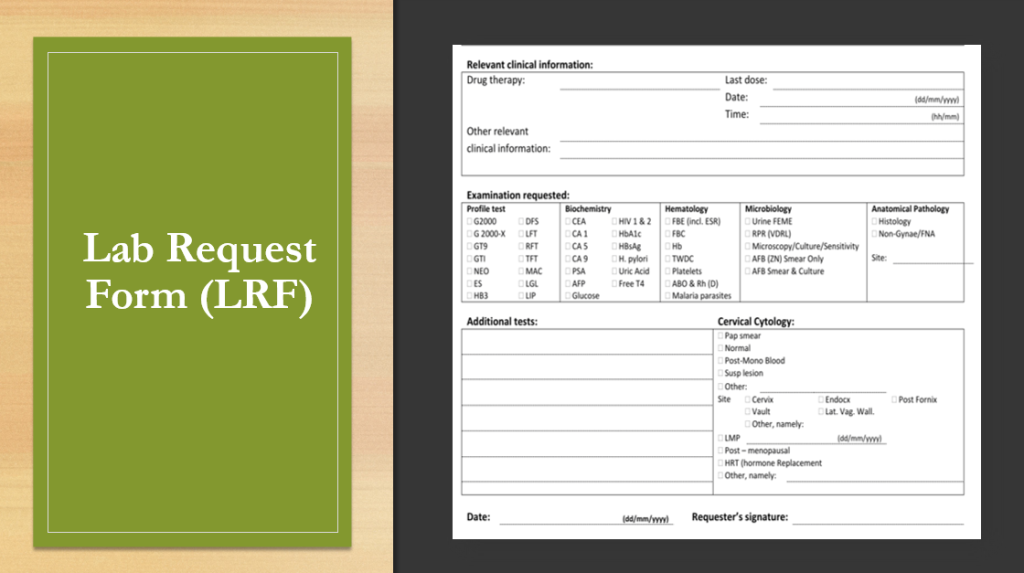
Lab Request Form (LRF)
LRF is a communication link between, requesting physician’s lab staff and users of laboratory services.
•Inadequate information or errors arising from the process of filling out LRFs can significantly impact the quality of laboratory results, ultimately patient outcomes
Purpose
•It provides the laboratory essential information for accurate testing, reporting of results and billing
•Clinical diagnosis is indicated on request form to correlate laboratory data with the needs of physician
•Screening /diagnosis/ outbreak
•Medico-legal: also provide data of person collecting sample, with specific labeling of sample
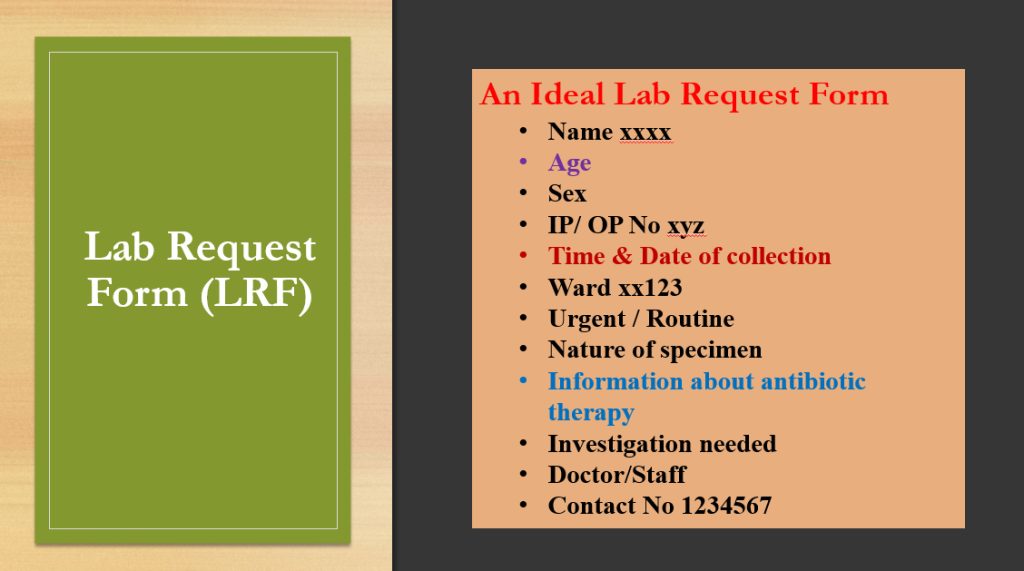
An Ideal Lab Request Form
•Name xxxx
•Age
•Sex
•IP/ OP No xyz
•Time & Date of collection
•Ward xx123
•Urgent / Routine
•Nature of specimen
•Information about antibiotic therapy
•Investigation needed
•Doctor/Staff
•Contact No 1234567
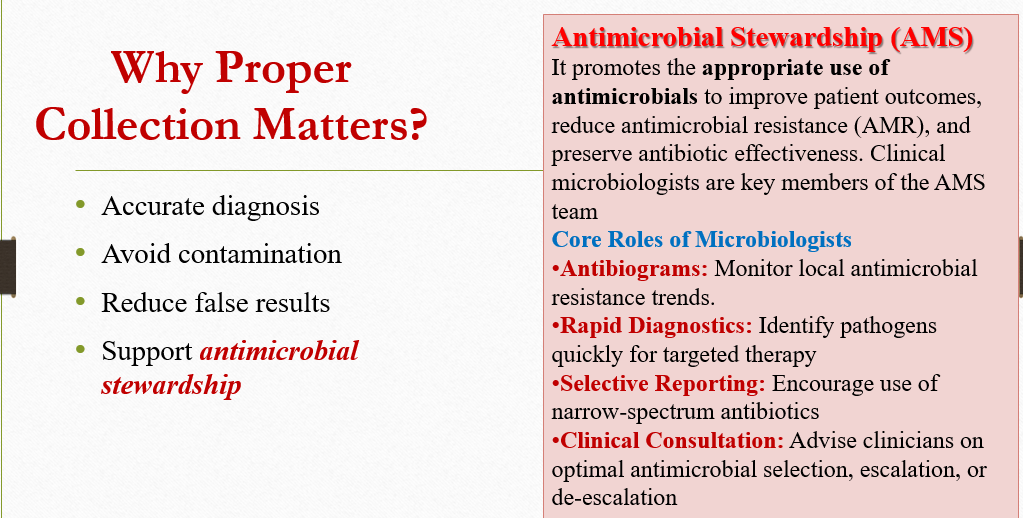
Why Proper Collection Matters?
•Accurate diagnosis
•Avoid contamination
•Reduce false results
•Support antimicrobial stewardship
Antimicrobial Stewardship (AMS)
It promotes the appropriate use of antimicrobials to improve patient outcomes, reduce antimicrobial resistance (AMR), and preserve antibiotic effectiveness. Clinical microbiologists are key members of the AMS team
Core Roles of Microbiologists
•Antibiograms: Monitor local antimicrobial resistance trends.
•Rapid Diagnostics: Identify pathogens quickly for targeted therapy
•Selective Reporting: Encourage use of narrow-spectrum antibiotics
•Clinical Consultation: Advise clinicians on optimal antimicrobial selection, escalation, or de-escalation
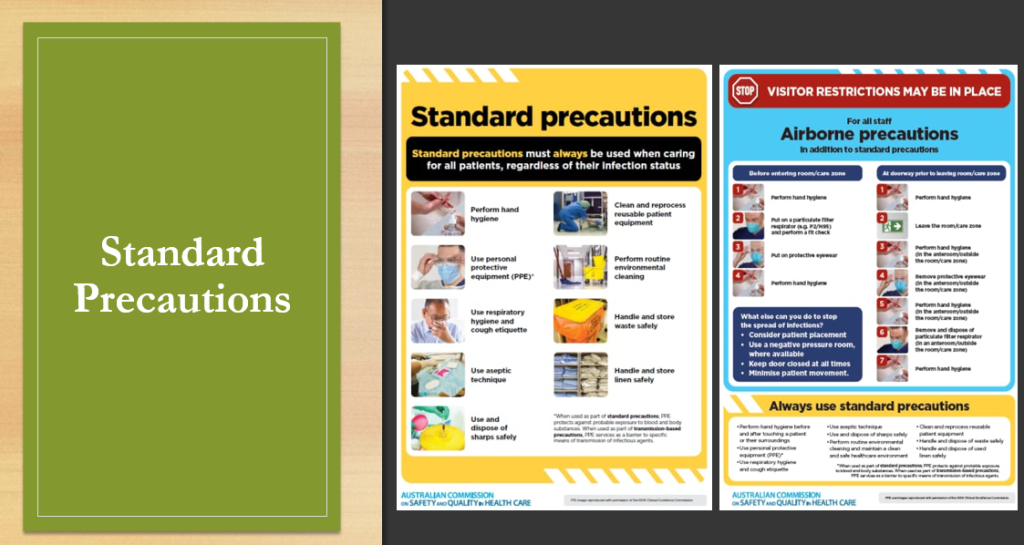
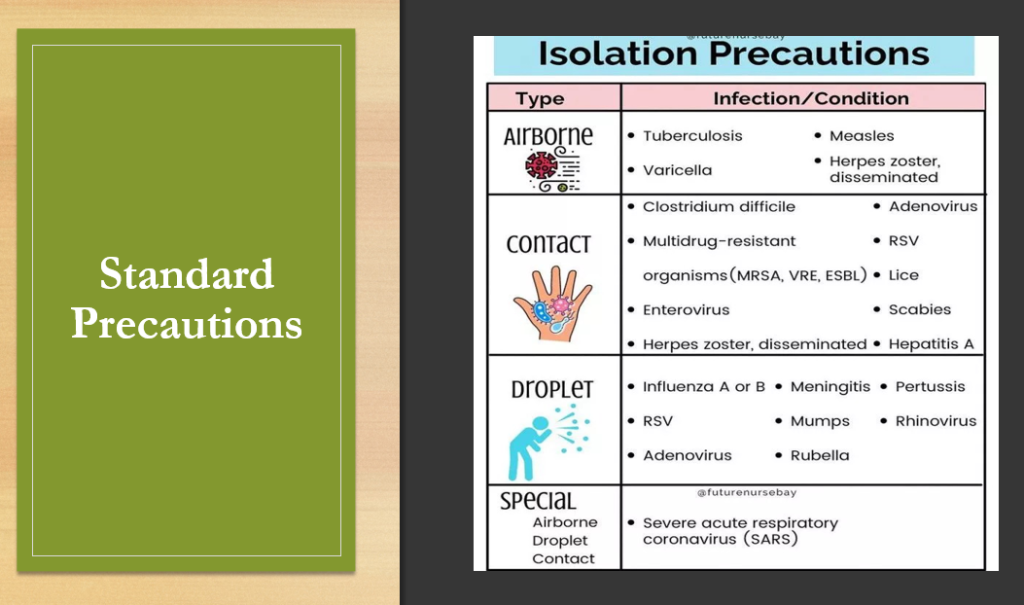
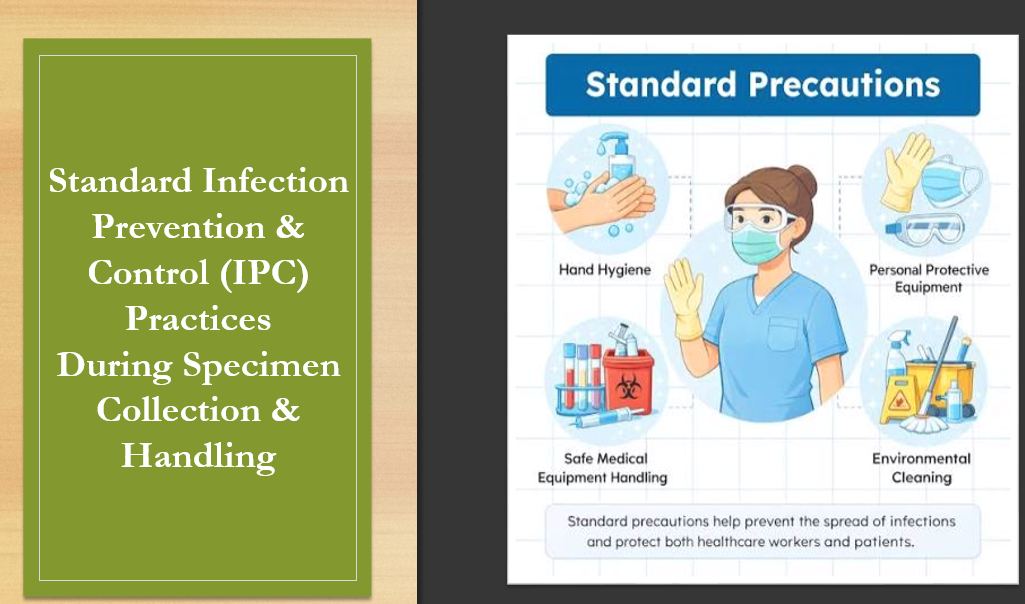
Standard Precautions
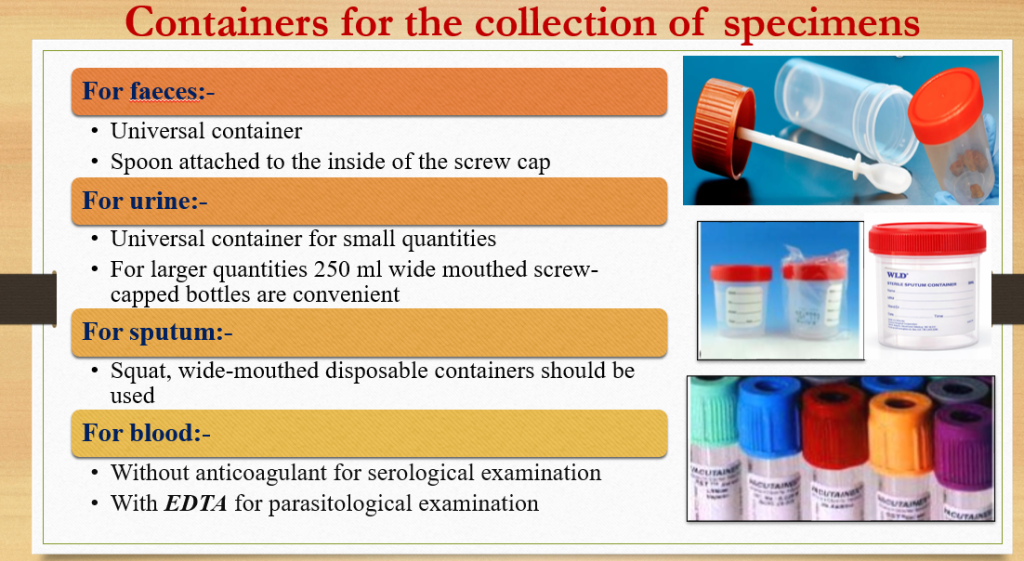
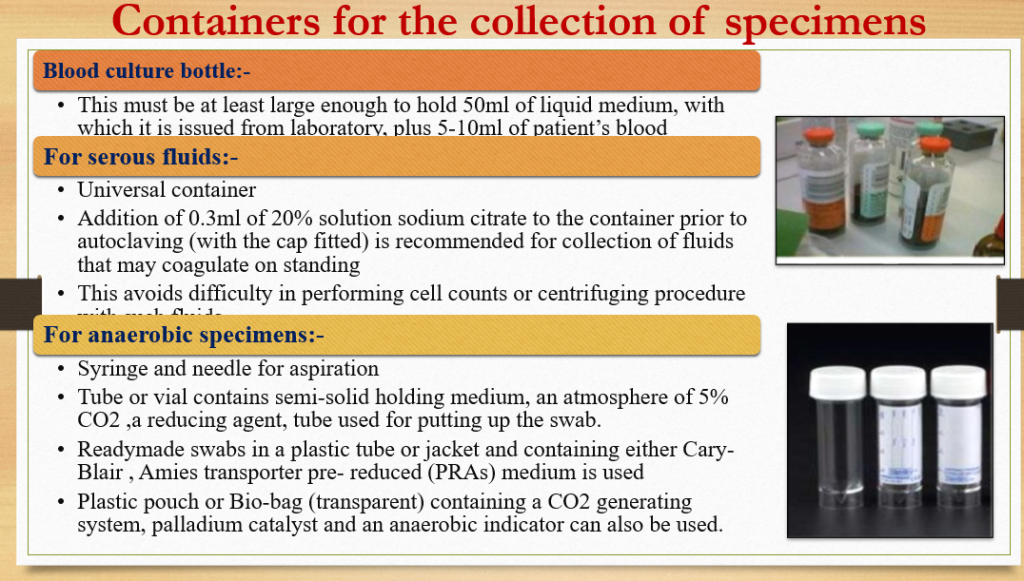
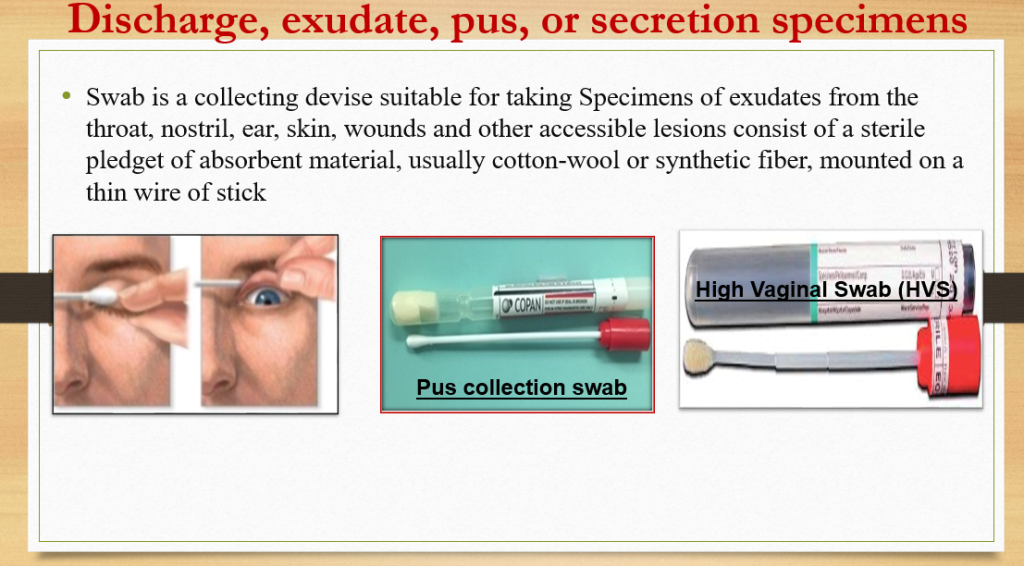
Containers for the collection of specimens
Swabs For Specimen Collection
•
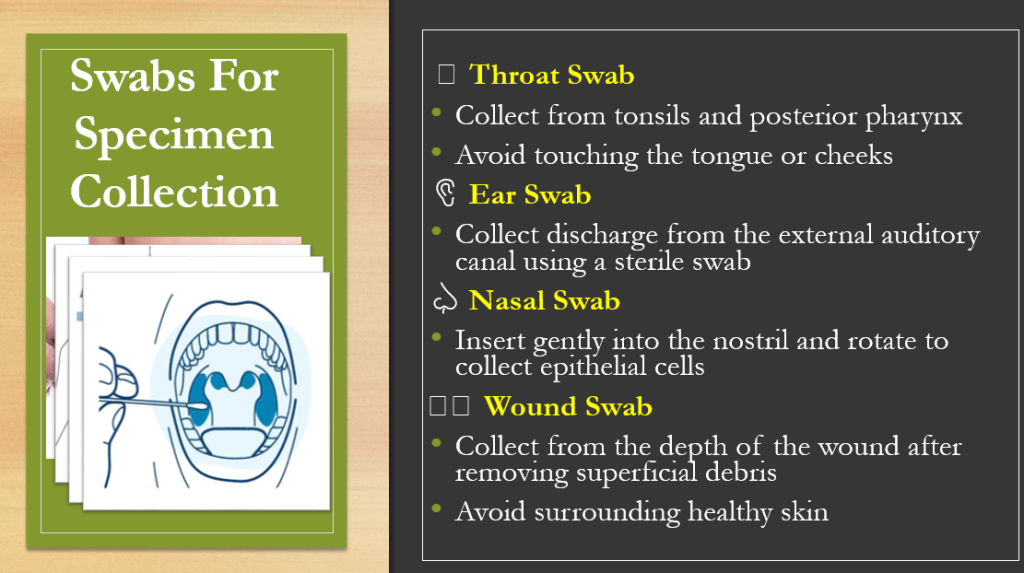
🗣️ Throat Swab
•Collect from tonsils and posterior pharynx
•Avoid touching the tongue or cheeks
👂 Ear Swab
•Collect discharge from the external auditory canal using a sterile swab
👃 Nasal Swab
•Insert gently into the nostril and rotate to collect epithelial cells
🩹 Wound Swab
•Collect from the depth of the wound after removing superficial debris
•Avoid surrounding healthy skin
Key Principles
✅ Use a sterile swab
✅ Avoid contamination by touching non-sterile surfaces
✅ Place the swab immediately into the appropriate transport medium
✅ Label and send promptly to the microbiology laboratory
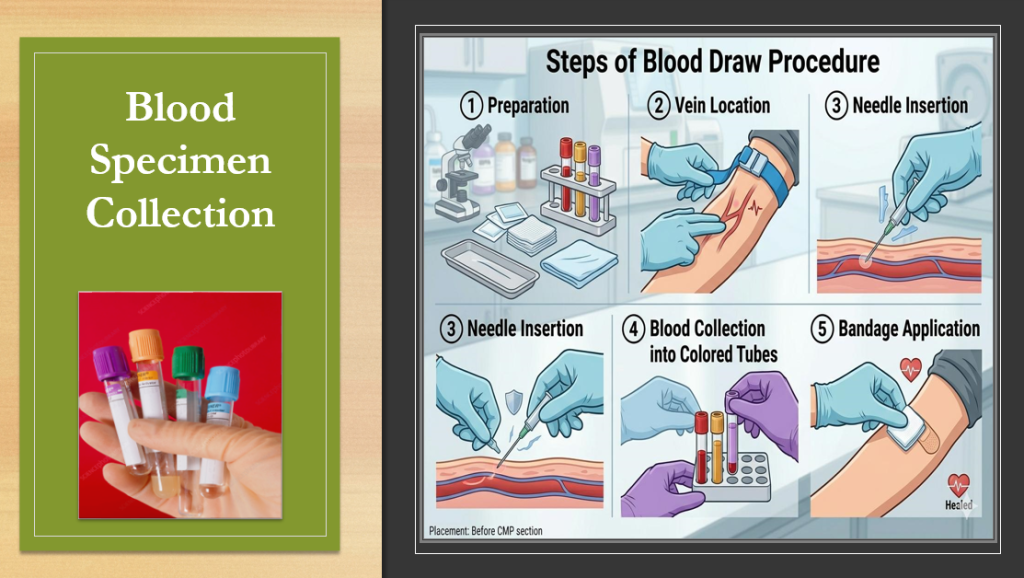
Blood Specimen Collection
Sputum Specimen Collection
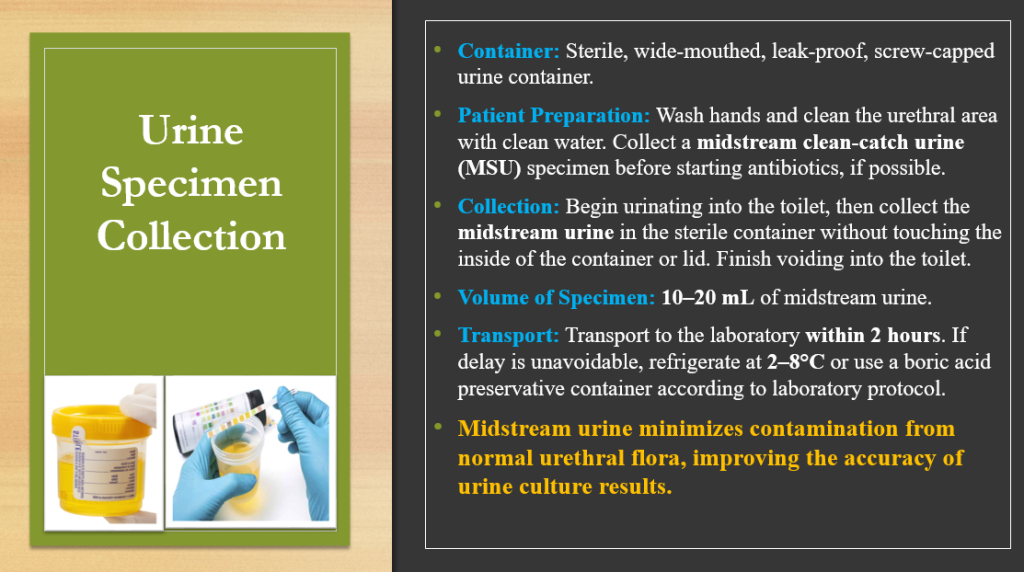
Urine Specimen Collection
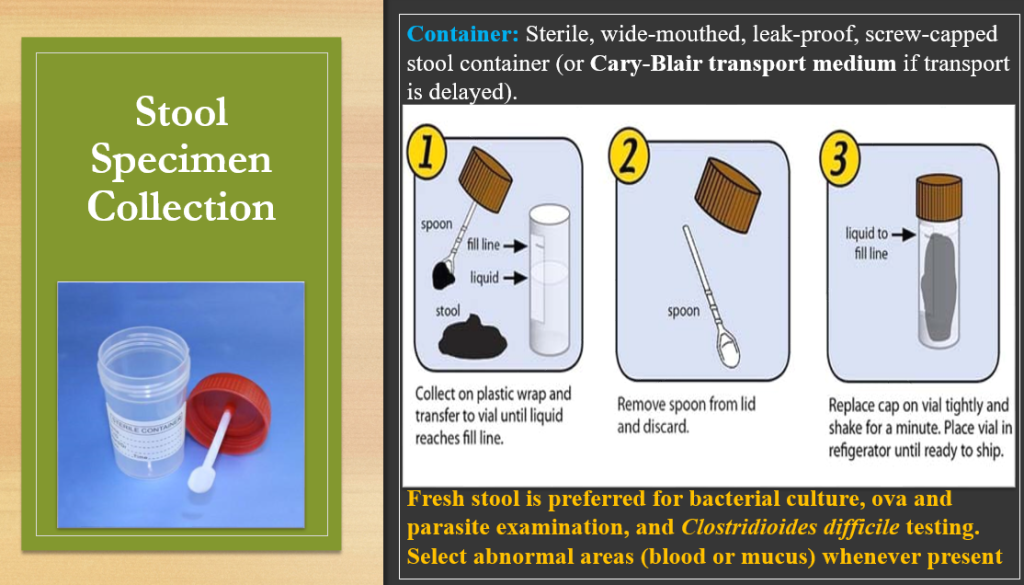
Stool Specimen Collection
Sample Rejection Criterion
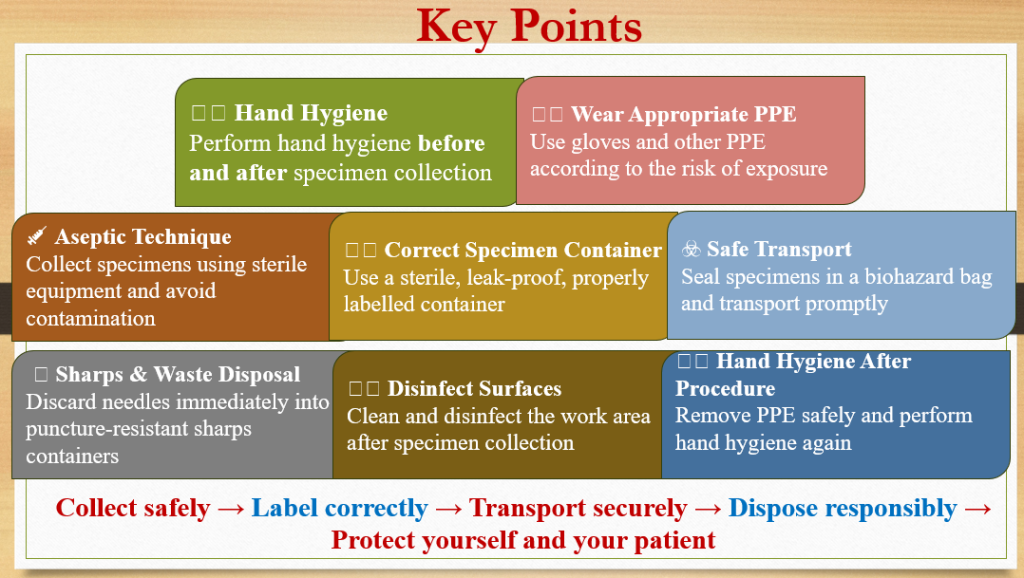
Standard Infection Prevention & Control (IPC) Practices During Specimen Collection & Handling
Hand Hygiene
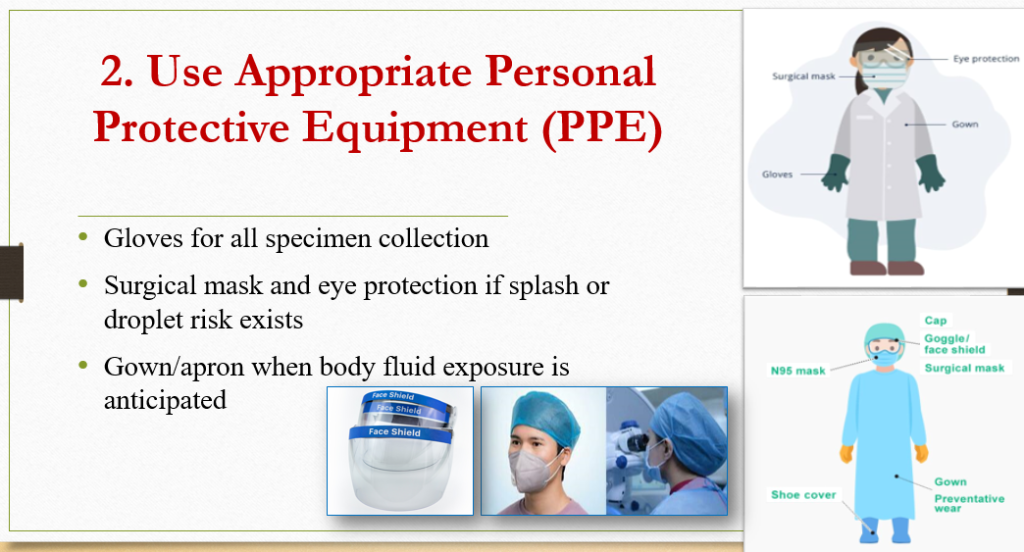
Use Appropriate Personal Protective Equipment (PPE)
Maintain Aseptic Technique
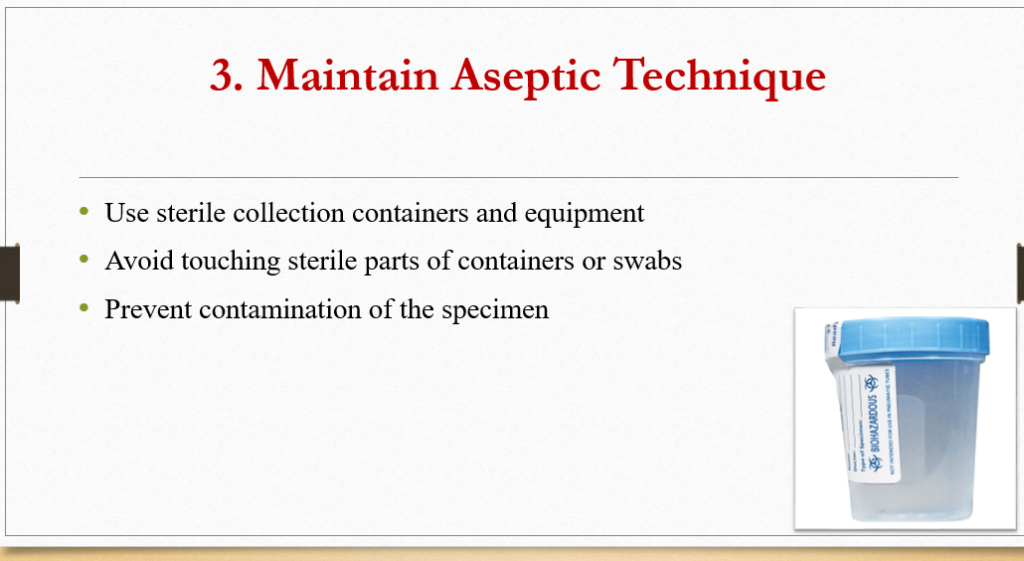
•Use sterile collection containers and equipment
•Avoid touching sterile parts of containers or swabs
•Prevent contamination of the specimen
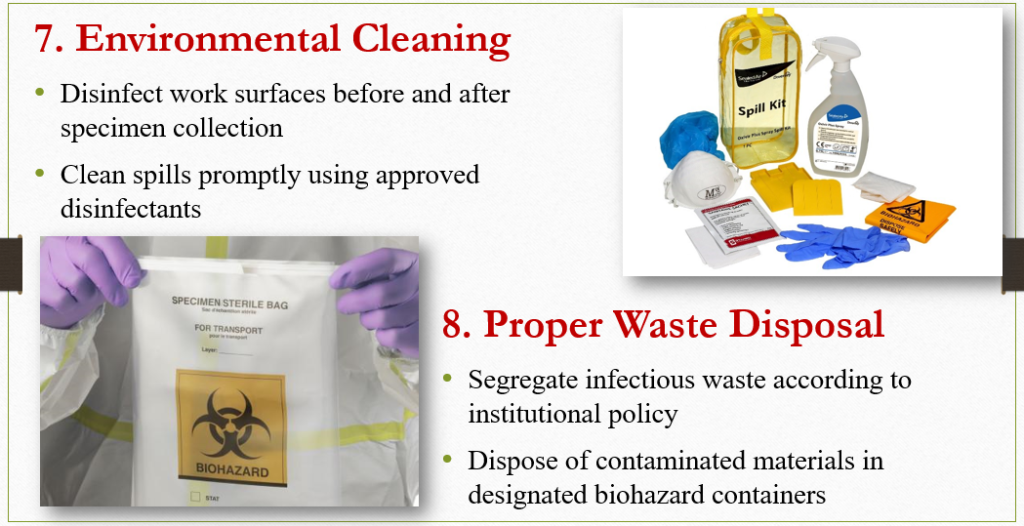
Safe Handling of Specimens
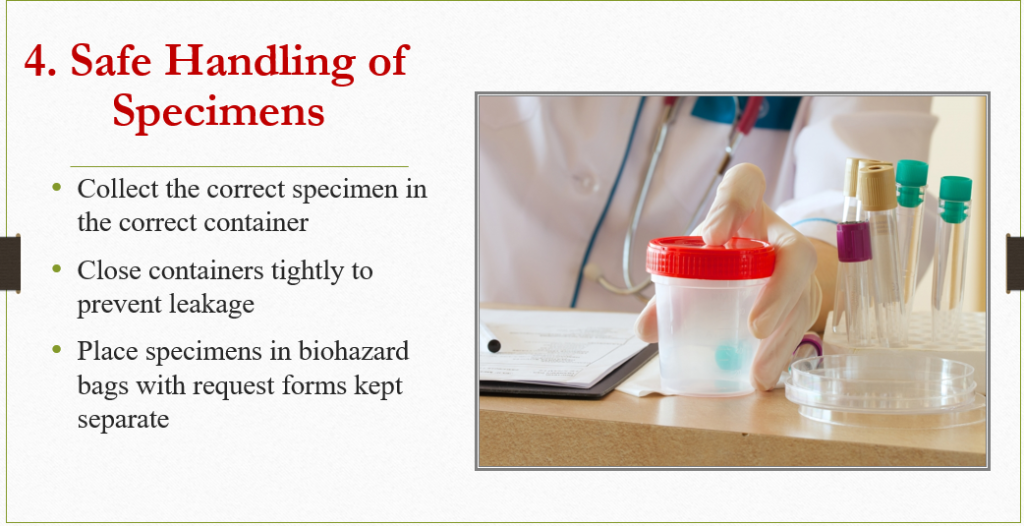
•Collect the correct specimen in the correct container
•Close containers tightly to prevent leakage
•Place specimens in biohazard bags with request forms kept separate
Proper Labeling
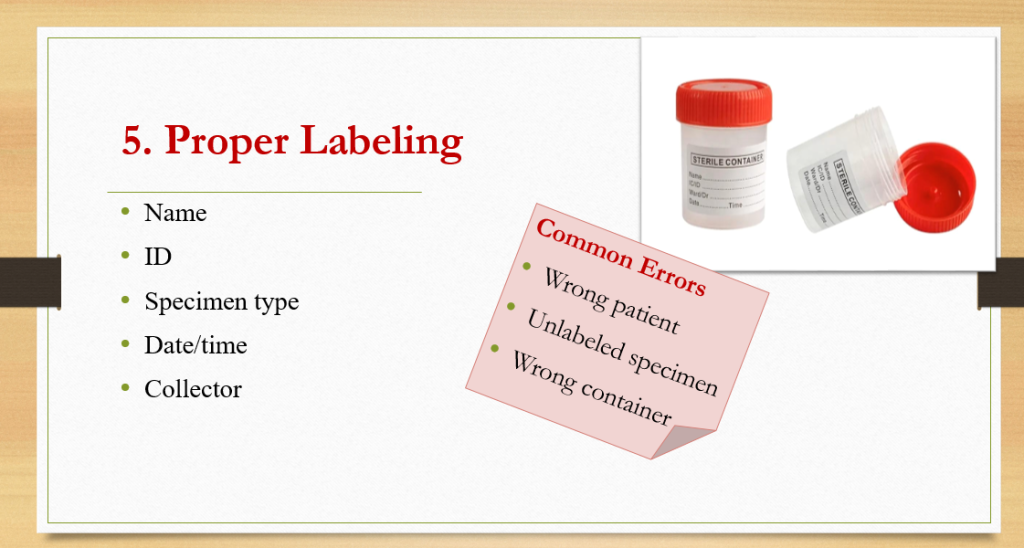
•Name
•ID
•Specimen type
•Date/time
•Collector
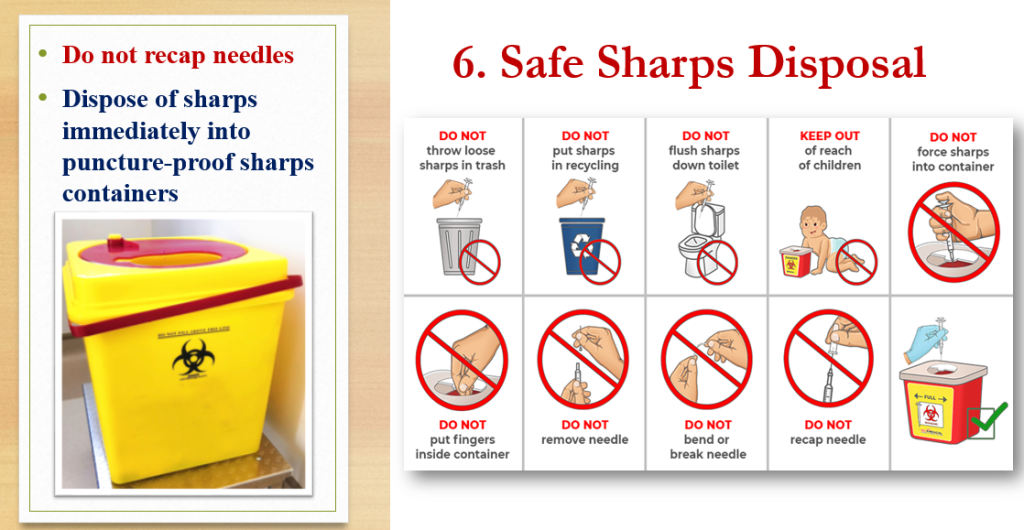
Safe Sharps Disposal
More useful Links
More Medical Links